
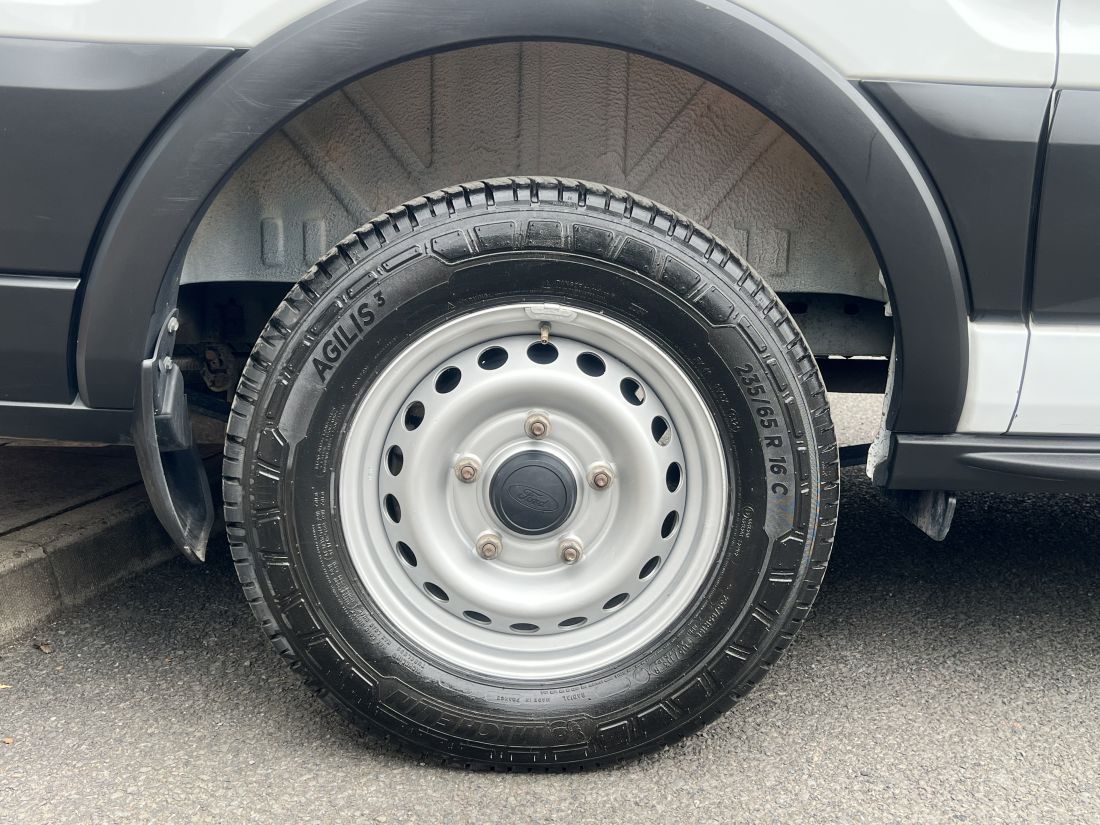
Proper Tyres for Light Commercial Vehicles (LCVs). Why Car Tyres Won’t Cut It...
Light commercial vehicles (LCVs), like vans up to 3.5 tonnes are the workhorses of many businesses. Whether you’re a delivery driver, tradesperson, fleet manager or van owner, using the correct tyres on your van is essential. This post explains why regular passenger car tyres are unsuitable (and even illegal) for LCVs, and offers practical advice on tyre safety for UK roads and regulations. Short answer: your van needs proper commercial rated tyres, not car tyres, to stay safe and legal on the road.
Car Tyres vs. Van Tyres: Legal and Safety Differences
At a glance, car and van tyres may look similar, but they are not interchangeable. A van tyre is specifically engineered for heavier loads and hard use, fitting a normal car tyre on a van could be unsafe and even illegal . In fact, UK regulations mandate that vans and light commercial vehicles be equipped with “C” marked tyres (tyres designed for commercial use with higher load capacity). These C rated van tyres are built to handle the rigours of LCV service, whereas passenger tyres are not.
Key differences between passenger car tyres and LCV (van) tyres include:
Load Rating and Markings: Van tyres carry a much higher load index. Look for a “C” after the size on the sidewall (e.g. 215/65R16C), this denotes a commercial tyre. Such tyres often show two load index numbers (for single vs. twin-wheel axles), indicating the heavy weight they can support . By design, C marked tyres can be inflated to higher pressures for greater load capacity. They should never be replaced with ordinary car tyres, as doing so will harm durability and handling . In short, the tyre’s load rating must meet or exceed your van’s maximum axle weight; anything less is illegal and will cause an MOT failure .
Stronger Construction (Ply Rating): Van tyres are constructed with reinforced carcasses (often referred to as 8-ply or 10-ply rated, even if modern tyres don’t literally use 8–10 layers). This gives them stiffer sidewalls and tougher internal structure to carry heavy cargo. The reinforcement makes them more resistant to bumps, kerbs, and potholes, common challenges for delivery vans without suffering damage . In comparison, regular car tyres (typically 4-ply rated) have more flexible sidewalls suited to lighter loads and a softer ride, and they cannot withstand the weight and pressure that van service demands .
Speed Ratings: C-marked van tyres usually have lower speed ratings than high-performance car tyres . They are often rated for maximum speeds around the legal limit (for example “R” or “T” rating, which is up to ~106–118 mph) – plenty for UK vans that are limited to 70 mph on motorways. The focus of van tyres is on carrying capacity and safety under load, rather than sustained high speed. (Note: using tyres with a speed rating below the van’s requirements can also be illegal and unsafe, just like load ratings always match or exceed the vehicle’s specified speed symbol .)
Tread Design and Rubber Compound: Van tyres are optimised for longer life and stability under heavy use. Many have protective features like reinforced sidewalls and deeper original tread depths than car tyres, to deliver more mileage before wearing out. The rubber compounds might be harder to cope with constant loads and high mileage, giving better durability and fuel economy at the expense of a bit of ride comfort or grip when the van is empty. By contrast, standard car tyres prioritize ride comfort and grip for lighter vehicles – they would wear out rapidly or overheat if consistently run at a van’s loaded weight.
In summary, van tyres are purpose built for LCVs. They are heavier and stronger, built to carry heavier loads at higher pressures, and tailored for the demands of commercial use. Using a passenger car tyre on a van compromises all these factors, which is why it’s both unsafe and against the law .
Load Ratings, Sidewall Strength and Braking Under Load
Load rating is arguably the most critical difference. Every tyre has a load index number on its sidewall (e.g. 104, 109, etc.) which corresponds to the maximum weight it can safely carry. LCVs need tyres with high load indices to support the vehicle’s weight plus cargo. For example, a large van (3.5 tonne GVW) often requires tyres rated around 109/107 (which equates to roughly 1,030 kg per tyre in single fitment) or higher. Mounting tyres with an insufficient load index is both dangerous and illegal, tyres must be able to support the vehicle’s max axle load .
Why load rating matters: If a tyre is overloaded beyond its rating, it will overheat, deform and risk catastrophic failure. Under heavy loads (tools, materials, deliveries), an underrated tyre can suffer a blowout, a sudden tyre burst, especially at motorway speeds . The extra strain also causes excessive flexing in the sidewall, which impacts vehicle stability and braking.
Sidewall strength: Van tyres’ stiffer sidewalls mean they hold their shape under load. This improves stability when cornering or braking with a full van. Passenger tyres on a loaded van would squash and flex too much, leading to sloppy handling. In a panic stop or evasive maneuver, they cannot maintain a good contact patch, resulting in longer braking distances and impaired steering control . In short, braking performance and road grip suffer greatly if the tyres are not strong enough for the weight. Reinforced van tyres, on the other hand, keep the van planted and stable when carrying a heavy payload.
Wear and heat resistance: An overloaded car tyre will run much hotter (due to internal friction) and wear out far faster. Van tyres are designed to run cool at higher loads and often use tougher tread compounds to resist wear from the high torque and weight of commercial use. They also generally start with more tread depth, which helps with longevity and with maintaining traction over many miles . Using a regular tyre on a van would likely lead to premature tyre wear, uneven tread, and possibly tread separation under stress. You’ll end up replacing tyres more frequently (negating any upfront cost saving of buying car tyres) and increase the risk of tyre failure in the meantime .
Bottom line: The load index and construction of the tyre must match the demands of your van. Overstressing a tyre affects everything, braking, steering, handling and longevity, so never skimp on the proper load-rated tyre. The UK’s tyre safety organizations emphasize that the tyre’s load rating is not optional; it’s a legal safety requirement and key to confident driving with a full van .
Risks of Using Regular Car Tyres on a Van
Fitting normal car tyres on an LCV isn’t just a bad idea in theory, it brings very real risks:
Blowouts and Accidents: The most immediate danger is a tyre blowout due to overload or overheating. A blowout is a rapid tyre failure (essentially the tyre exploding) which can cause loss of control, especially in a heavily loaded van at speed . The forces of a tyre bursting are violent, it can even cause vehicle damage or injuries. Under-sized tyres dramatically raise this risk when your van is carrying tools, equipment or parcels.
Poor Handling & Braking: As discussed, car tyres on a van will struggle to maintain stability. Expect longer stopping distances, less grip on wet roads, and swaying or squirming under load. In an emergency stop or swerve, the van may not respond predictably. This endangers not only the driver but everyone on the road . Additionally, if the van is used heavily (say, multi-drop deliveries), the constant strain can lead to sudden tyre problems at the worst moment.
Premature Wear and Costs: Tyres not built for van service will wear out unevenly and quickly. You might save money upfront by using passenger tyres, but you’ll likely burn through them much faster (and risk downtime if a tyre fails). The van may also suffer more suspension wear because under-spec tyres don’t cushion properly under heavy loads .
Insurance and Legal Issues: Importantly, using incorrect tyres can invalidate your insurance and land you in legal trouble. In the UK, driving on tyres that don’t meet the vehicle’s requirements (insufficient load or speed rating, wrong size, or bald tyres) is considered using an unroadworthy vehicle. If you have an accident, insurers can refuse to pay out if the tyres are found to be inappropriate or not road-legal . You also face fines and penalty points, each illegal tyre can mean a fine up to £2,500 and 3 points. During an MOT inspection, the tester will fail the vehicle if the tyres are not suitable for the vehicle’s weight and specs . Simply put, “wrong tyres” can get your van off the road, either via enforcement or a crash.
MOT Failure: As noted, a van can fail its MOT test for having the wrong tyres. MOT rules specify that the load index must at least match the maximum axle weight, and tyres of different types (radial vs crossply, etc.) can’t be mixed on an axle . While speed ratings on vans are generally acceptable if they meet 70+ mph, a tyre with a passenger-car load rating on a 3.5t van will be flagged. It’s simply not worth the risk – you’ll have to replace them to pass, on top of the hassle and cost of a re-test.
In summary, using regular car tyres on a commercial van is a risk to safety, legality, and your wallet. It may seem to work when the van is empty, but once you load up, those tyres are a ticking time bomb. As one safety organization warns, the wrong tyres can lead to “catastrophic blowouts at motorway speeds, invalidated insurance policies and costly MOT failures”. Always stick to the correct, van-rated tyres for peace of mind.
Practical Tips: Checking Tyre Suitability and Replacement
Ensuring your van has the right tyres and that they’re in roadworthy condition is a vital part of operating an LCV. Here are some practical tips for UK van owners and drivers:
Know Your Required Tyre Specs: Check your vehicle handbook or the tyre information placard (often on the driver’s door jamb or fuel flap). It will specify the correct tyre size, load index, and speed rating for your van . For example, you might see a recommendation like 215/65 R16C 109/107R. The “C” tells you it needs a commercial tyre, the load indices (109 single/107 twin) and speed symbol R. Make sure any replacement tyre matches or exceeds these specs. If in doubt, consult a tyre specialist – tell them your van model and typical load usage, and they’ll advise the proper tyre type .
Look for the “C” Mark on Tyres: An easy check is to look at your tyre sidewall markings. If your current tyres have a “C” after the size, they are commercial-rated van tyres. If you see “XL” or “Reinforced” instead, those may be extra-load car tyres (often used for smaller vans or MPVs), which might be acceptable only on car-derived vans or lighter models . For any medium or large van, you should be seeing the C-marking. Two load numbers on the sidewall are another clue it’s a van tyre. If your tyres are not C or reinforced as required, it’s time to change them.
Maintain Correct Tyre Pressures: Van tyres typically require much higher inflation pressure than car tyres often around 50–65 psi (3.0–4.5 bar) for the rear tyres, depending on load, and a bit less for the fronts. Always inflate to the vehicle manufacturer’s recommended pressures for front and rear axles (these are usually listed on the same door sticker or in the manual). Under-inflation is especially dangerous on loaded vans: it causes heat build-up, poor fuel economy, and risk of tyre failure . Even a few PSI below spec can impact reliability and handling. Check pressures regularly (at least monthly) and before long trips. Don’t rely solely on TPMS warnings; use a gauge to be sure. Conversely, avoid over inflation (unless carrying maximum loads per the handbook) because too much pressure reduces grip and causes harsh ride. Adjust pressures according to load – some vans specify higher pressures when fully laden.
Monitor Tread Depth and Condition: Worn or damaged tyres are both unsafe and illegal. The UK legal minimum tread depth is 1.6 mm across the central 3/4 of the tyre, any less will fail an MOT and could get you fined . In practice, it’s highly recommended to replace tyres once they wear down to around 3 mm tread remaining, as below that, wet grip deteriorates significantly . Use a tread gauge or the 20p coin test (the border of a 20p coin is about 3mm). Also, check for uneven wear (could indicate misalignment or constant overloading) and for any bulges, cuts or embedded objects in the tyres. Cuts or bulges in the sidewall are serious, any damage exposing cords is an MOT failure and the tyre must be replaced . If you spot a nail or screw in the tread, get it inspected; a simple puncture repair might save the tyre if addressed early .
Don’t Mix Tyre Types: Ensure the same type of tyre is used on each axle, same size, construction, and load rating. Mixing radial and cross-ply on the same axle is illegal , and even mixing a van tyre with a car tyre of the same size is a bad idea as their characteristics differ. Ideally, use matching tyres on all four wheels for balanced handling. If you must replace tyres in pairs, put the new tyres on the rear axle for stability (unless your vehicle handbook advises differently).
Replace Tyres in Time: Beyond tread wear, consider the age of your tyres. Over years, the rubber degrades (even if tread remains). Many tyre makers and the British Tyre Manufacturers’ Association suggest replacing tyres that are over 6-7 years old as the rubber can crack and weaken. For vans that rack up mileage, you’ll likely hit the tread wear limit before age, but if not, check the DOT date code on the sidewall (it’s a four-digit number, e.g. 4219 means week 42 of 2019) . If your tyres are very old or showing surface cracks (“perishing”), swap them out, don’t wait for a blowout. Remember, driving on a damaged or excessively worn tyre is illegal and extremely dangerous .
Adapt to Seasons if Needed: UK weather is variable. If your van operates in harsh winter conditions or on icy roads, consider fitting all-season or winter tyres (which come in van versions marked with the snowflake symbol). While not a legal requirement in the UK, winter-rated tyres can greatly improve safety in snow or heavy frost. For most of the year, a good quality regular van tyre (with decent wet-grip rating) is sufficient for UK rain and mild winters, just ensure you have enough tread depth for wet traction. Always replace tyres in sets appropriate for the season and never mix winter tyres with summer tyres on the same vehicle.
Regular Inspections: Make tyre checks part of your routine. When you do your van’s walk-around check (daily or weekly), take a moment to look at the tyres: check pressures, scan for nails, cuts, and ensure the tread isn’t below the wear indicators. These small habits can prevent big problems. It’s far better to spot a bald rear tyre or a sidewall cut while parked than to discover it during an emergency on the motorway.
By following these steps, you’ll ensure your tyres are suited for the job and in top condition. The tyres are literally where “the rubber meets the road”, they affect your braking, handling, and load-carrying ability. Proper van tyres, maintained well, will keep your vehicle safe, legal, and efficient.
Conclusion
Using the proper tyres on your light commercial vehicle is essential for safety and compliance. Commercial rated (C-marked) tyres are designed to handle the heavy loads, tougher duty cycle, and higher inflation pressures that vans require . Regular car tyres might fit on the rims, but they won’t cope with the weight or legal requirements leading to compromised performance, rapid wear, risk of blowouts, and legal penalties ranging from MOT failure to invalidated insurance .
For van drivers and fleet operators in the UK, the advice is clear: check your tyres and stick to the correct specification. Invest in quality LCV tyres with the right load index and keep them in good shape (proper pressure, sufficient tread). The UK’s roads and climate present many challenges – from wet motorways to potholed city streets – but with the right tyres, your van will handle them safely. Remember, your tyres carry your livelihood and safety on their shoulders (or rather, sidewalls!). By using proper van tyres and maintaining them well, you’ll ensure your journeys are not only legal but also as safe and efficient as possible. Safe driving!
Sources:
Van Reviewer – Difference between car and van tyres and why using car tyres on a van can be unsafe/illegal
Michelin (UK) – Reinforced “C” tyres are mandatory for vans; purpose of C-marking and reinforced tyre design
British Tyre Manufacturers’ Association – Guide on LCV tyres: C-marked tyres for light commercial use and not replacing them with car tyres
Olympus Tyre Fitting – Tyre load ratings importance: consequences of wrong load rating (blowouts, insurance invalidation, MOT failure)
TyreSafe UK – Wrong tyre specifications can invalidate insurance and risk blowouts
GOV.UK MOT Manual – Tyre requirements for class 7 (LCV) vehicles: load rating must meet axle weight; using wrong tyres can cause MOT failure
Van Reviewer – Tyre maintenance tips for van drivers (tread depth, pressure, inspections, blowout risks)
Camperbuyer (Motorhome advice) – Tyre tread depth UK legal minimum 1.6mm, recommended replacement at 3mm